
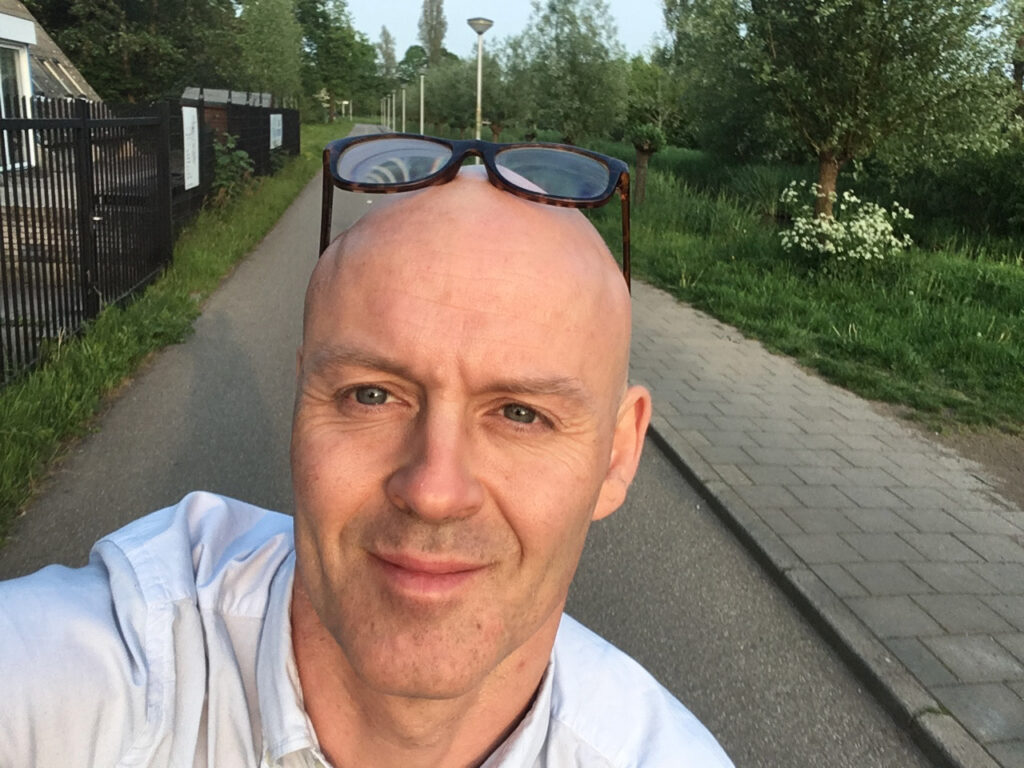
Speaker: Professor Ralph MacKinnon, Consultant Paediatric Anaesthetist, Manchester University NHS Foundation Trust
Title: What Have Communities of Practice (in Genetics & Genomics) Ever Done for Us? An evidence-based case for collaborative science and an invitation to build the next one
Speaker Bio:Professor Ralph MacKinnon has been a consultant in paediatric anaesthesia and critical care transport physician at Manchester University NHS Foundation Trust for over two decades, and is the co-founder of Out There Health Tech. He began in genetics with a first-class degree from the University of St Andrews and research posts in North American genetics/genomics institutions, before founding the UK’s first Gilles de la Tourette clinic and research team outside of London, here in St. Marys.
Across his career Professor MacKinnon has built/developed communities of practice at every scale: the North-West Simulation Education Network (50+ NHS and academic sites), the International Network for Simulation-based Paediatric Innovation, Research and Education (685 members, 40 countries), and the Managing Emergencies in Paediatric Anaesthesia global collaboration. A widely published researcher with a PhD from the Karolinska Institutet, he now leads the 500-member Life Science & Health Technology Community of Practice, connecting Greater Manchester’s life-science & health technology innovators through Out There Health Tech.
Abstract: Genomics has built more working communities of practice, at more scales, than almost any other field of medicine; not by choice but by necessity: no lab has enough rare-disease patients to reach statistical power alone, no funder can build a reference genome by itself, and no company can set a data standard others will trust. This talk tests that claim against named UK and international examples: the 100,000 Genomes Project and GeCIP, East Genomics, COG-UK, GA4GH, global rare-disease pooling, the Human Pangenome Reference Consortium and finds it holds: faster diagnoses, interoperable data, crisis-speed sequencing, a fairer reference genome. One seam still stands open though, connecting discovery to commercial and clinical adoption and the talk closes with an invitation to help build a GM-based community that closes it.